Why Is the Coating on My Glasses Peeling or Cracking?
Quick Answer:
If your glasses lenses are developing fine cracks, peeling areas, cloudy patches, or unusual reflections, the lens coating may be damaged.
Heat, improper cleaning, everyday wear, and aging can all affect lens coatings over time.
Once a coating is significantly damaged, cleaning usually cannot restore it.
Understanding what caused the damage can help you take better care of your glasses and know when it may be time to replace the lenses.
1. What Is the Coating on Your Glasses Lenses?
Modern eyeglass lenses can have different coatings designed to improve the wearing experience.
Depending on the lens, these may include anti-reflective coatings, scratch-resistant coatings, UV protection, or blue-light filtering features.
For example, an anti-reflective coating can help reduce reflections from the lens surface, while a scratch-resistant coating is designed to make the lens surface more resistant to everyday scratches.
These coatings are very thin and sit on the surface of the lens. That means they can also be affected by how you clean, store, and use your glasses.
2. Why Does the Coating on Glasses Peel or Crack?
There isn't always one single reason why a lens coating becomes damaged. In many cases, it happens gradually as the glasses are exposed to heat, cleaning products, friction, and everyday use.
Heat and Temperature Changes
High temperatures can be particularly hard on lens coatings.
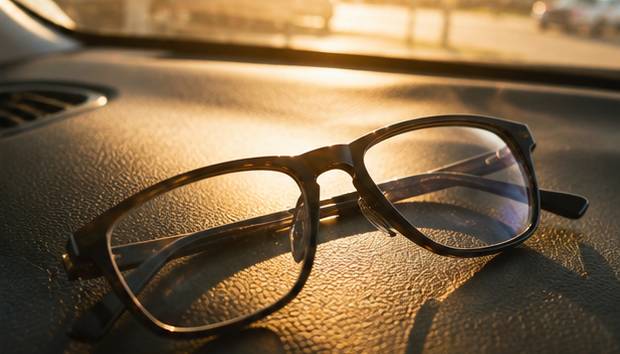
Leaving your glasses inside a hot car, placing them under direct sunlight for extended periods, or exposing them to strong heat from a hair dryer can cause problems over time.
Repeated changes between hot and cool environments may also put stress on the different layers of a lens.
In some cases, this can contribute to fine cracks, peeling, or changes in the appearance of the coating.
Improper Cleaning
The way you clean your glasses matters too. Wiping lenses with clothing, paper towels, or other rough materials can create repeated friction on the lens surface.
Some household cleaners may also contain ingredients that are not suitable for eyeglass lenses.
Even if the damage is not immediately visible, repeated exposure can gradually affect the coating.
Everyday Wear and Aging
Lens coatings are not designed to last forever. Frequent handling, regular cleaning, environmental exposure, and years of use can gradually change the condition of the coating.
So, if an older pair of glasses begins to show small changes on the lens surface, it does not necessarily mean you did something wrong. Sometimes, it is simply part of normal wear and aging.
3. What Does Damaged Lens Coating Look Like?
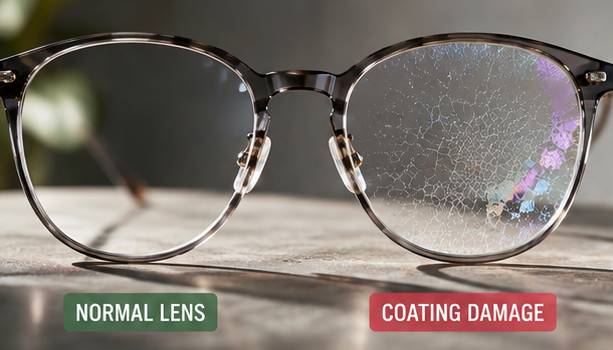
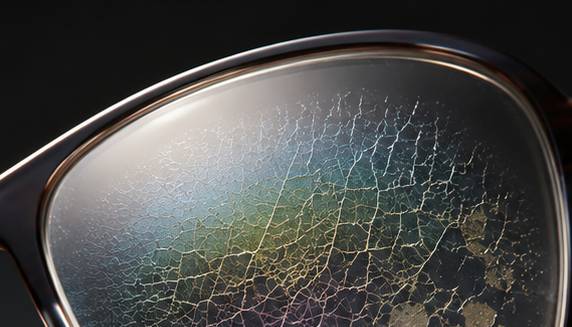
Coating damage does not always look the same. Depending on the type and extent of the damage, you may notice fine lines, web-like patterns, peeling areas, cloudy patches, or unusual reflections on the lens.
Sometimes the change is easy to spot. Other times, it may only become visible when light hits the lens from a certain angle.
It is also important to remember that not every mark on a lens means the coating is damaged. Fingerprints, oil, water spots, and cleaning residue can make lenses look cloudy too.
4. Is It a Scratch, Dirt, or Damaged Coating?
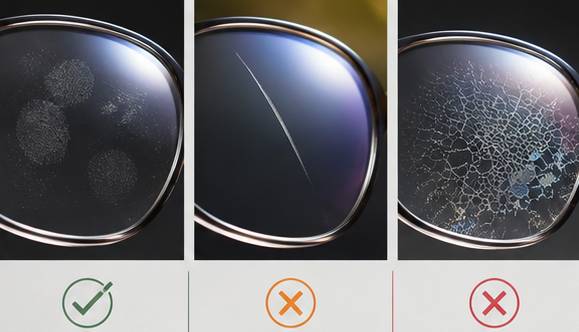
If your lenses suddenly look different, the first step is figuring out what you are actually seeing. A simple smudge may disappear after proper cleaning, while a scratch or damaged coating will remain.
Here is a quick comparison:
What You See | Possible Cause | Can Cleaning Help? |
Smudges or fingerprints | Oil or dirt | Usually yes |
Water spots | Dried water or residue | Usually yes |
A single visible line | Scratch | No |
Fine cracks or web-like patterns | Possible coating damage | Usually no |
Patchy or peeling surface | Coating damage | No |
If you are unsure, avoid trying aggressive cleaning methods to remove the mark. You could make the damage worse.
5. Can You Fix Peeling or Cracked Lens Coating?
Unfortunately, damaged lens coating is usually not something you can simply clean away.
If the problem is dirt or residue, proper cleaning may restore the appearance of the lens. But when the coating itself has cracked, peeled, or deteriorated, cleaning cannot rebuild the damaged layer.
You may also come across home remedies that claim to remove scratches or restore damaged lenses. These methods are not recommended, as abrasive materials or household products can cause additional damage to the lens surface.
If the coating damage is significant and begins to affect your vision or wearing experience, replacing the lenses may be a better option.
6. How Can You Prevent Lens Coating Damage?
Taking care of your glasses does not require a complicated routine. Small habits can make a difference over time.
Avoid leaving your glasses in places with extreme heat, especially inside a parked car on a hot day. When you are not wearing them, keeping them in a protective case can also help prevent unnecessary scratches and surface damage.
When cleaning your lenses, use a method designed for eyeglasses rather than whatever material happens to be nearby. Handling your glasses carefully and avoiding unnecessary rubbing can also help preserve the lens surface.
7. When Should You Replace Your Glasses?
A small change in the appearance of a lens does not always mean you need a new pair immediately.
However, if the coating is severely damaged, the lenses have noticeable scratches, or the damage is affecting your vision or comfort, it may be time to consider replacement.
It is also worth looking at the condition of the frame. If the lenses and frame are both showing significant signs of wear, replacing the entire pair may make more sense than trying to fix one part.
FAQs
Q1: Can I remove the damaged coating from my glasses?
It is not recommended to try removing the coating yourself. DIY methods may further damage the lens surface.
Q2: Can toothpaste remove scratches from glasses?
No. Toothpaste and other abrasive household products may damage the lens surface or coating even further.
Q3: Why do my glasses have tiny cracks on the lenses?
Fine, web-like cracks may be a sign of coating damage, especially if they appear across the surface of the lens. However, the exact cause can vary.
Q4: Does heat damage eyeglass lens coatings?
High temperatures may affect lens coatings over time. It is best to avoid exposing your glasses to extreme heat or leaving them in a hot car.
Q5: How long do eyeglass lens coatings last?
There is no fixed lifespan that applies to every lens coating. Its durability can depend on the lens type, how often you wear your glasses, your environment, and how you care for them.
Conclusion: Take Care of the Coating, Not Just the Lens
Lens coatings may be thin, but they can play an important role in your everyday eyewear experience. When you notice cracks, peeling, unusual reflections, or cloudy patches, take a moment to identify the cause before trying to clean or repair them.
With the right care and storage habits, you can help keep your glasses in better condition for longer. And when the lens coating is no longer providing a clear and comfortable viewing experience, it may be time to consider a new pair.